Rule No. 27: WHAT IS DELAYED IS NOT DENIED
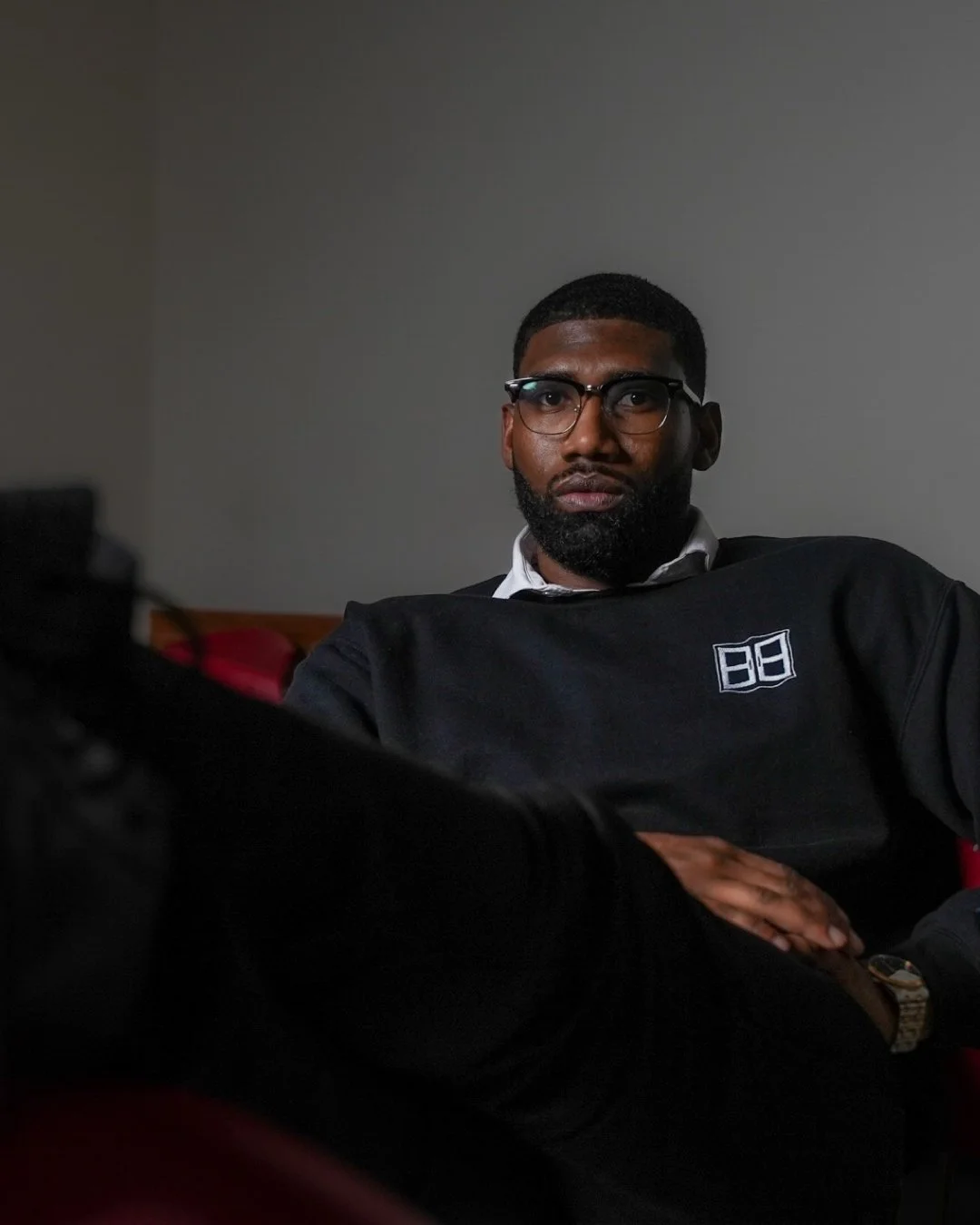
Reflection Collection in the in-between—delay as a classroom, not a cage.
Hello Dear Reader,
Welcome back to another week in The Playbook—Rules for Life. I pray this week has given you at least one clear reminder that God is still paying attention to the details—that He has not gone silent on your story.
Where does the end of the week find you? I know we are in office party season, finishing our year-end reviews, and already forecasting for the new year. In the midst of it, let’s not forget that Christmas Day is less than a fortnight away.
This last week has been one full of new beginnings, even as the year ends. I said in my last post that there was an exciting announcement coming from Turning Words Into Windows® this week. Well, it is here—and as some of you may have already seen on social media or in your email inbox—we’ve launched our Reflection Collection. It is another exciting step we’re taking as a brand in addition to the literary works that will be published in the new year.
I also found myself hosting a year-end reflection virtually for St. John’s alumni. The event was simply wonderful, and I found a sense of peace and community in the vulnerability of those who joined us. We opened ourselves to be seen intimately, reflect deeply, and share authentically—without performance or pretense. These are the kinds of moments I’ve sought to create and foster through my work, and especially through my life. Now, to see them continue on a larger scale feels like I’m moving from the edge of becoming and stepping into the age of being.
There’s also another announcement I have to make—but again, loose lips sink ships, so I’d prefer to let you all find out about it in the new year. What, for the last year and change, felt like denial was instead delay in the form of preparation.
And that’s where today’s rule lands: What is delayed is not denied.
The Lesson
During my inaugural creative writing course in October, I had my scholars focus on the concept of liminality—the transitional phase individuals experience when moving between two distinct stages of life.
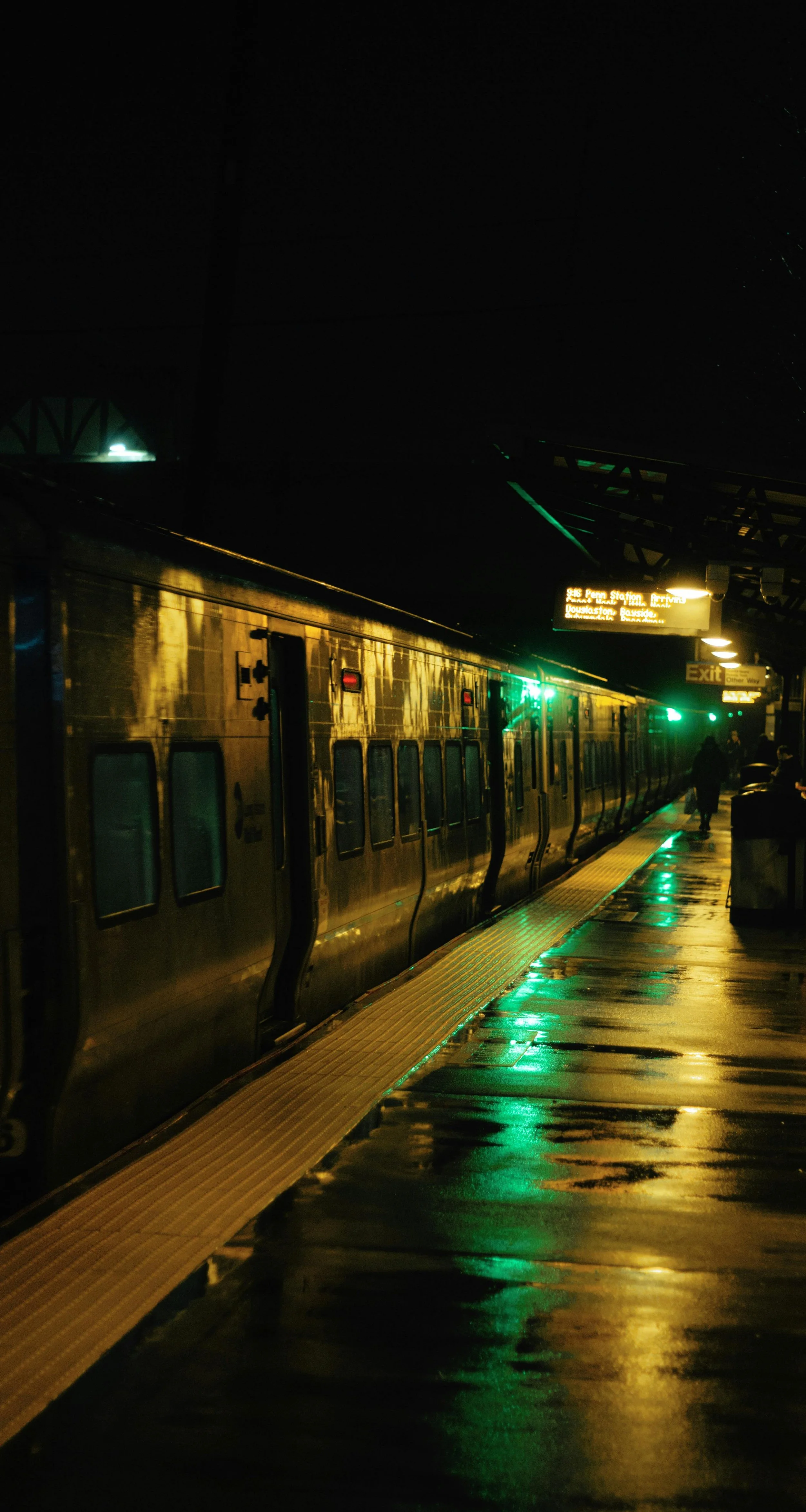
Delay is a platform: you feel the wind, still waiting to move.
This concept is not foreign to me. My poetry and long-form work feature liminality—and, by extension, liminal spaces—as core thematic elements. The truth is, we all exist in these spaces where we’re caught between “not anymore” and “not yet.” These places often feel unsettling, empty, familiar yet foreign, and dreamlike too.
Delay is its own liminal space.
In a physical sense, it is the hallway between doors, the train platform while you wait for your train, and the empty stage after the lights come up but before anyone actually walks out.
In a more metaphysical sense, delay is the space after a breakup, the gap between jobs, the wait for an acceptance letter. Nothing is technically wrong, but nothing feels fully right either. You are no longer who you were, but you are not yet who you are becoming. It is that unsettled in-between where delay lives.
If we’re honest, it is one of the hardest places to stand. Because delay sounds like this:
“We love your work, but it’s not the right fit for us at this time.”
“We’ll circle back after the holidays.”
“You’re doing all the right things—just keep going.”
“Now is not the time…but don’t let it go, don’t give up.”
I’ve learned that delay does not give you a clean yes or a clean no. It serves you “not yet” on a platter and still expects you to say thank you while you’re left alone with your thoughts.
It’s in the space of delay where we find ourselves questioning everything:
Did I mishear God?
Did I misjudge my gifts?
Did I want too much?
Should I have settled for less?
In that way, delay can feel like a quiet denial. But today’s rule reframes it:
What is delayed is not denied.
Especially in the hands of a God who always finishes what He starts.
When “Not Yet” Feels Like “Never”
The challenge with liminal spaces is that they rarely come with a timestamp. If you knew, “This season will last exactly six months,” you could brave the storm and push through. You could brace. You could plan around it. You could wait—if not joyfully, at least somewhat patiently.
From my own experience, when you do not know how long the waiting will last, “not yet” quickly begins to masquerade as “never.” That is when despair deceptively starts whispering:
“Other people get answered quickly. Clearly, you’re not one of God’s priorities—or favorites.”
“Look at how far ahead they are. You’ve missed your moment.”
“If it was really meant for you, it would have happened already.”
But these are all lies.
Delay distorts time—stretching minutes into hours, months into years, and years into what feels like lifetimes. This is where we remember what we learned in Rule 26. That rule taught us how to handle outcomes—to feel wins and losses fully before moving on within 24 hours so that we don’t become trapped. Rule 27 teaches us how to handle unfinished stories—the ones still unfolding, with no clear outcome yet.
If Rule 26 was about releasing what already happened, then Rule 27 is about remaining faithful while things are still happening. One protects you from being frozen in the past. The other protects you from giving up on the future.
This year, I learned that faith isn’t just your ability to wait for an answer. Faith is also your ability to wait in the absence of an answer.
A Necessary Honesty
Delay is not always holy—but it can be. If we were honest, we would admit that sometimes we are delayed because we procrastinate. Or we are so afraid to fail that we stall. We avoid the hard conversation, the application, the apology. We talk about the dream more than we work on it. I’ve been especially guilty of that last one. Now I know that those delays are not divine; they are avoidant. But there is another kind of delay—the kind you encounter even when you are obedient.
It occurs even when you do the work, submit the project, steward your character, and show up when no one is clapping. You say “yes” to uncomfortable, nonlinear growth, and still, things move slowly.
That’s the delay this rule is speaking to: the delay of preparation.
In some circles, we’re taught that you’re delayed because you’re not praying hard enough; or because your faith isn’t “good enough.” We’re asked, “Do you believe you’re delayed because God is punishing you?”
What if, instead, we saw that God is not punishing us—but forming us? Forming us like a potter molding clay. Forging us like a blacksmith hammers steel to ensure it can stand up to pressure. If we are to trust that God is wise, then we must also consider that He is protecting us. That if He gave us what we were asking for too early, it would crush us. It would become an idol instead of an assignment. It would confirm all the wrong narratives about who you are and what gives you worth. Some doors have to open slowly, or the weight of them will break you.
I know that if it were not for my own delay, I would not have written my second trilogy, Embers of Light and Shadows. I would not have started my creative writing course. I would not be launching the Reflection Collection. My delays allowed me to break the shackles of habits that kept me prisoner for years.
Living Between Promise and Fulfillment
Six years ago, in my college dorm room, I had a vision for Turning Words Into Windows®. A few months later, I stood on the roof of a parking garage and told someone dear to me what it would be. I did not imagine it would be what it is today, but that delay created room for development and growth. Over the last year, there were things in my own life that looked and felt like denial. Doors I believed God had pointed me toward stayed shut. Conversations stalled, opportunities slipped away, and things I spoke about didn’t materialize. From the outside, it looked like one long line of unanswered prayers—even as I kept leaving voicemails on God’s phone.
Only in hindsight can I say with clarity: it was not denial. It was delay with purpose.

While doors stayed shut, the work went on in quiet faith.
While those doors remained closed, I finished four books of poetry. I deepened my teaching practice and refined my pedagogy. I clarified the vision for Turning Words Into Windows® and watched God build a community around the work.
I was confronted, again and again, with who I was when no one was watching—and I saw the truth of myself. God was not ignoring my desire; He was aligning the person who would inhabit the answer. What I thought was God saying “No” was actually God saying, “Not like that, and not yet.”
If you are honest, you might see similar patterns in your own story—seasons where you were furious at God for being “late,” only to later realize He was precisely on time.
The Reflection
When we sit in delayed spaces, our first instinct is usually to focus outward:
“If only they would email me back.”
“If only that person would apologize.”
“If only this system would recognize my value.”
And there is truth in that. Systems fail. People disappoint. Gatekeepers gatekeep. But if we only look outward, we miss the invitation of delay. Delay is not just about what has not arrived to you yet. It is about what has not yet been formed in you.
Waiting asks hard questions:
“Who am I when no new opportunity comes in this week?”
”Who am I when my work is not being publicly affirmed?”
”Who am I when I am not announcing anything, launching anything, or achieving anything?”
”Who am I when I simply be?”
If your identity is built on constant arrival—new projects, new relationships, new milestones—then delay will feel like a kind of death. But if your identity is rooted in being held by God, delay can become something else entirely:
A furnace that purifies.
A classroom that trains.
A quiet hallway where you and God actually have time to talk.
In Rule 26, I wrote:
“Most of us don’t struggle because we failed. We struggle because we froze—stuck in moments God has already moved past.”
Now in Rule 27, I would add:
Most of us do not struggle only because doors are closed. We struggle because we assume closed doors mean closed stories. So while delay tempts us to believe the story is over, God invites us to believe He is still writing.
What the Word Says
Scripture is full of people living in delayed spaces:
Abraham received a promise of descendants that would number like sand, then waited years before seeing Isaac.
Joseph had dreams of leadership long before he ever stepped into a position to save anyone. His delay took him through the prison and then to the palace.
David was anointed king and then went back to tending sheep, dodging spears, and hiding in caves.
Even Jesus spent thirty years in relative obscurity before three years of public ministry.
In our human eyes and timeline, all of that looks inefficient—wasted time, wasted potential, delayed purpose. I’ve learned that from heaven’s vantage point, it was all preparation.
Time isn’t lost; it’s held. What God grows has an appointed hour.
“For the vision is yet for an appointed time; it testifies about the end and will not lie. Though it delays, wait for it, since it will certainly come and not be late.” —Habakkuk 2:3. There is an appointed time, and the vision is not guessing—because God is not scrambling.
“Let us not become weary in doing good, for at the proper time we will reap a harvest if we do not give up.”—Galatians 6:9.There is a “proper time” to reap. Our job is not to predict it; our job is not to give up before we get there.
“He has made everything beautiful in its time.”—Ecclesiastes 3:11. Not “in our preferred time.” In its time.
Delay in Scripture is rarely wasted. It is woven.
The Practice
So, how do we actually live today’s rule without drifting into delusion or despair? Here are a few practical steps that have helped me.
1. Name what feels delayed
Take a moment this week to write down the areas of your life where you feel delayed.
Be specific:
“I feel delayed in my career because…”
“I feel delayed in relationships because…”
“I feel delayed in my healing because…”
Do not spiritualize it away. Be honest—God can handle it.
Then, beside each one, ask:
“Is this something God promised—or something I prefer?”
That distinction will save your hope from attaching itself to timelines and outcomes God never guaranteed.
2. Ask what preparation looks like
For each delayed area, ask:
“What would it look like to prepare as if this will happen, in God’s time?”
Maybe that looks like:
Refining your craft instead of refreshing your inbox.
Going back to therapy, journaling, or prayer to address wounds that would sabotage the very thing you are asking for.
Practicing the habit now that you think you will magically adopt “once life finally settles.”
Preparation is not about forcing God’s hand. It is about telling God with your actions, “I believe You enough to get ready before I see it.”
3. Guard against comparison
Comparison is delay’s loudest accomplice. Where delay leaves you questioning, comparison leaves you wanting. When someone else receives in public what you have been asking for in private, it can make your delay feel like denial.
So the next time that sting shows up, try this:
Instead of scrolling in silence, pray a quick blessing over them:
“God, thank You for what You are doing in their life. Protect it. Grow it. Remind me that this is proof You are still moving, not proof that You have forgotten me.”
It is a small prayer, but it shifts the posture of your heart from scarcity to trust.
4. Set a “waiting rhythm” like the 24-hour rule
Rule 26 gave us a 24-hour boundary for wins and losses. Rule 27 invites us to create a rhythm for waiting.
For example:
“When I feel anxiety about timing, I will bring it to God in prayer before I bring it to social media.”
“When I feel stuck, I will take one small action of obedience instead of rehearsing worst-case scenarios in my head.”
“Once a week, I will pause and ask: Where do I see evidence—however small—that God is still moving?”
Delay is less suffocating when you have a rhythm for breathing inside it.
Rule No. 27
So here it is, plainly stated:
Rule No. 27: WHAT IS DELAYED IS NOT DENIED. It will happen.
Not because God signs off on every script we write for our lives, but because what He truly authors, He completes. He is the Author and Finisher of our faith. Remember that your task is not to control the clock, but to stay present, obedient, and open in the liminal space between “no longer” and “not yet.”
My prayer is that in this season—whatever feels unfinished, unresolved, or slow—you would sense God’s nearness in the hallway. He would remind you that you are not late, not forgotten, and not disqualified. That He would strengthen your hands to keep building, even when the doors have not opened yet.
Your story is still unfolding, and in the hands of a faithful God, what is meant for you will not miss you—even if it’s delayed.