Rule No. 23: BRING YOUR OWN BALL

USE WHAT’S IN YOUR HANDS
Hello Dear Reader,
Welcome back to another week in The Playbook—Rules for Life. How have you been? And where does the end of today find you—spiritually, mentally, emotionally, and physically? Were you able to do the challenge I left at the end of Rule 22? If not, don’t despair. This week offers another opportunity to take inventory of your thoughts—notice the patterns and write them down.
My last week was one of returns, continued new beginnings, and sitting in the quiet between where I was and where I’m going. On Friday, my church held a Trunk-or-Treat on Halloween night. We dressed in costumes that matched the Bible stories we told from the trunks of our decorated cars, then handed out candy to the kids who listened. It was a beautiful time—impacting the community while sharing the gospel felt deeply rewarding.
But it was my Thursday night that set the stage for today’s rule. I returned to the St. John’s President’s Dinner and found myself once again in a ballroom where I had once sat as a member of the President’s Society. Only this time, instead of working the event, I attended as a Graduate of the Last Decade (GOLD) member and as CEO of Turning Words Into Windows LLC.
It was an amazing experience—a moment that reminded me how far I’ve come since my college senior year, when I first received the vision for Turning Words Into Windows. It felt even more surreal knowing I now co-chair the President’s Society Alumni Association. Not bad for a boy from Guyana who arrived here bright-eyed and full of dreams.
And that’s where today’s rule begins: Bring your own ball.
The Lesson
It’s interesting to think we’ve all experienced this rule in action—literally. I remember childhood games of cricket, basketball, or football (soccer for my American readers) ending the moment the person whose ball it was had to leave. It usually signaled the end of play. After too many disappointing endings, I learned a simple truth: if I had my own ball, I could keep playing. With my own ball, I could play for hours and set my own pace. Someone had to go? No problem—I’d see them tomorrow while I kept enjoying myself.
Maybe for you it wasn’t a ball. Maybe it was a toy your cousin or friend owned—something you admired, maybe even envied, every time you saw it. Now, as adults, we may be far from the playgrounds of our childhoods, the living rooms of our cousins, or even the friends who shaped our playdates. Yet the rule still exists in theory.
You might be wondering, “Daniel, how does this apply to my life now—and how does it connect to the last two rules?”
Here’s how.
We’ve never stopped playing. The arena and the rules just changed. I went from driving the lane and beating defenders on the hardwood to splitting zone defenses inside my classrooms at All Hallows in the Bronx. The two up top? Negative self-talk and disbelief. The three below? Circumstance, fear, and pride. The ball became the content and life skills I was trying to place in the baskets of my students’ minds.
It was an amazing experience—a moment that reminded me how far I’ve come since my college senior year, when I first received the vision for Turning Words Into Windows. It felt even more surreal knowing I now co-chair the President’s Society Alumni Association. Not bad for a boy from Guyana who arrived here bright-eyed and full of dreams.
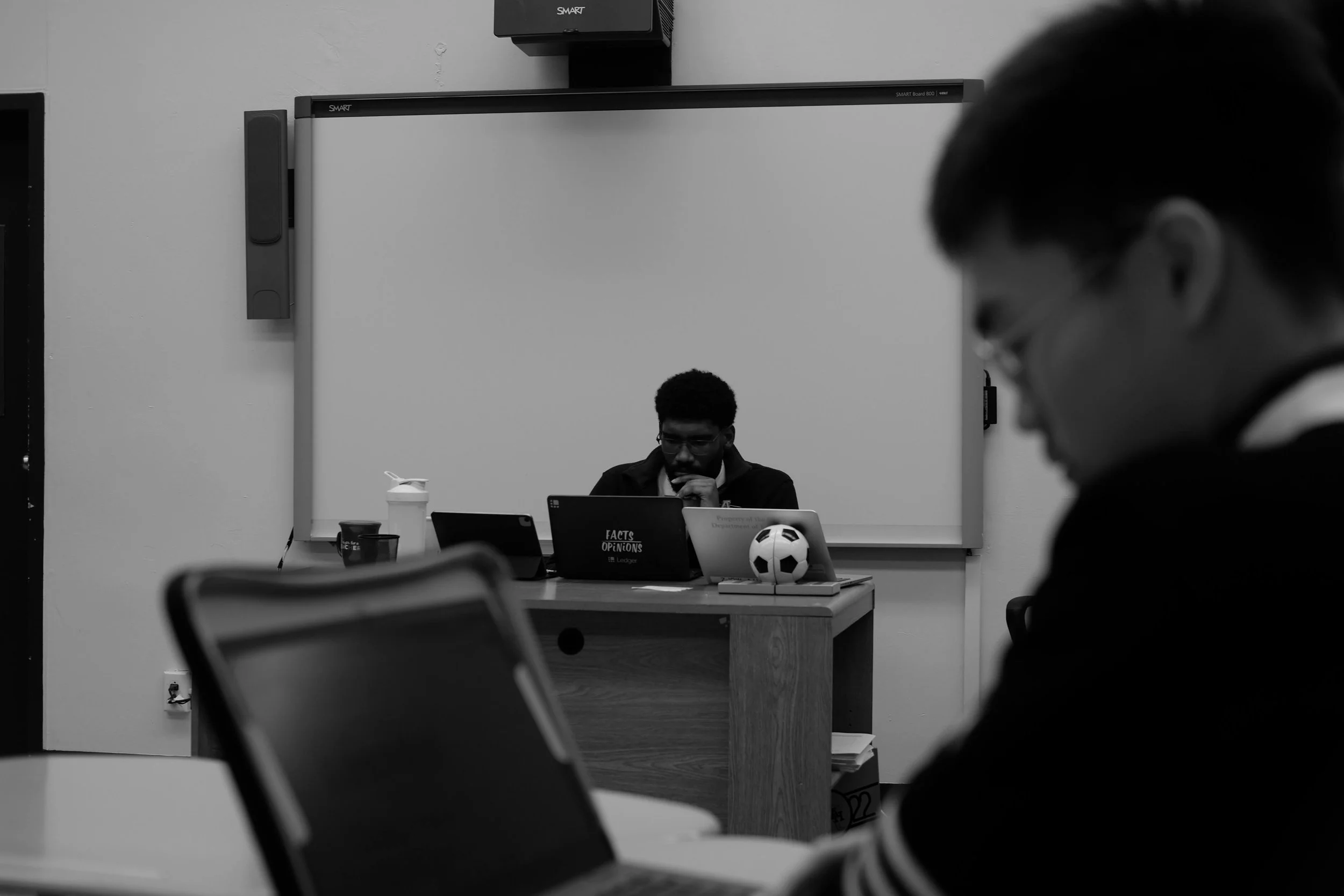
Mr. Haynes’ Media Class—All Hallows 2022
From boxing out defenders and grabbing rebounds to blocking out noise in my school library, helping my scholars rebound from hard days and lose themselves in a good book or an honest conversation out in Long Island. And when the arena changed suddenly—when I found myself on the outside after management made questionable calls—I stopped waiting for a whistle and started building anew. I took what was in my hands and, by the grace of God, brought Turning Words Into Windows® from idea to reality.
The Reflection
In Rule 21, I told you: “Everything depends on you—not because you are your own savior, but because God can only steer a moving vessel. The moment you decide to rise, He meets you there.”
And in Rule 22: “Control your thinking, because when your mind is aligned with heaven, everything else in your life begins to follow.” If you never move—if you never decide to rise—then when the arenas change, you’ll watch life pass you by as you sit with thoughts that crush you instead of uplift you.
If you never look at what’s inside your hands, you’ll never use it. For me, creating Turning Words Into Windows LLC was simply taking what was in my hands and building from there. If I hadn’t applied Rules 21 and 22, I wouldn’t be here writing Rule 23. Even as I write this, I’m reminded of the question God asked Moses in Exodus 4:2, when He called him to lead the children of Israel out of Egypt and into the Promised Land. Moses hesitated. He doubted whether the people would believe him or believe that God had sent him.
So God asked, “What is in your hand?” Moses replied, “A staff.” It was the same staff he’d seen a thousand times before—ordinary, worn, used to guide stubborn sheep. But to God, it was an instrument of miracles. That same staff parted the Red Sea (Exodus 14:16), struck a rock to bring forth water (Exodus 17:6), and was lifted high as a banner of victory when Israel fought its enemies (Exodus 17:11–13). That’s what happens when you stop waiting for someone else to start the game and realize God already placed everything you need right inside your hands.
We see the same truth again in 2 Kings 4:1—7, when a widow cried out to Elisha after her husband died and her creditors came to take her sons as slaves. When she told Elisha she had nothing left, he asked one simple question: “What do you have in your house?” She answered, “Nothing, except a little oil.”
To her, it seemed insignificant. But that small amount of oil, once placed in God’s hands, became the very thing that saved her family—filling jar after jar until her debts were paid.
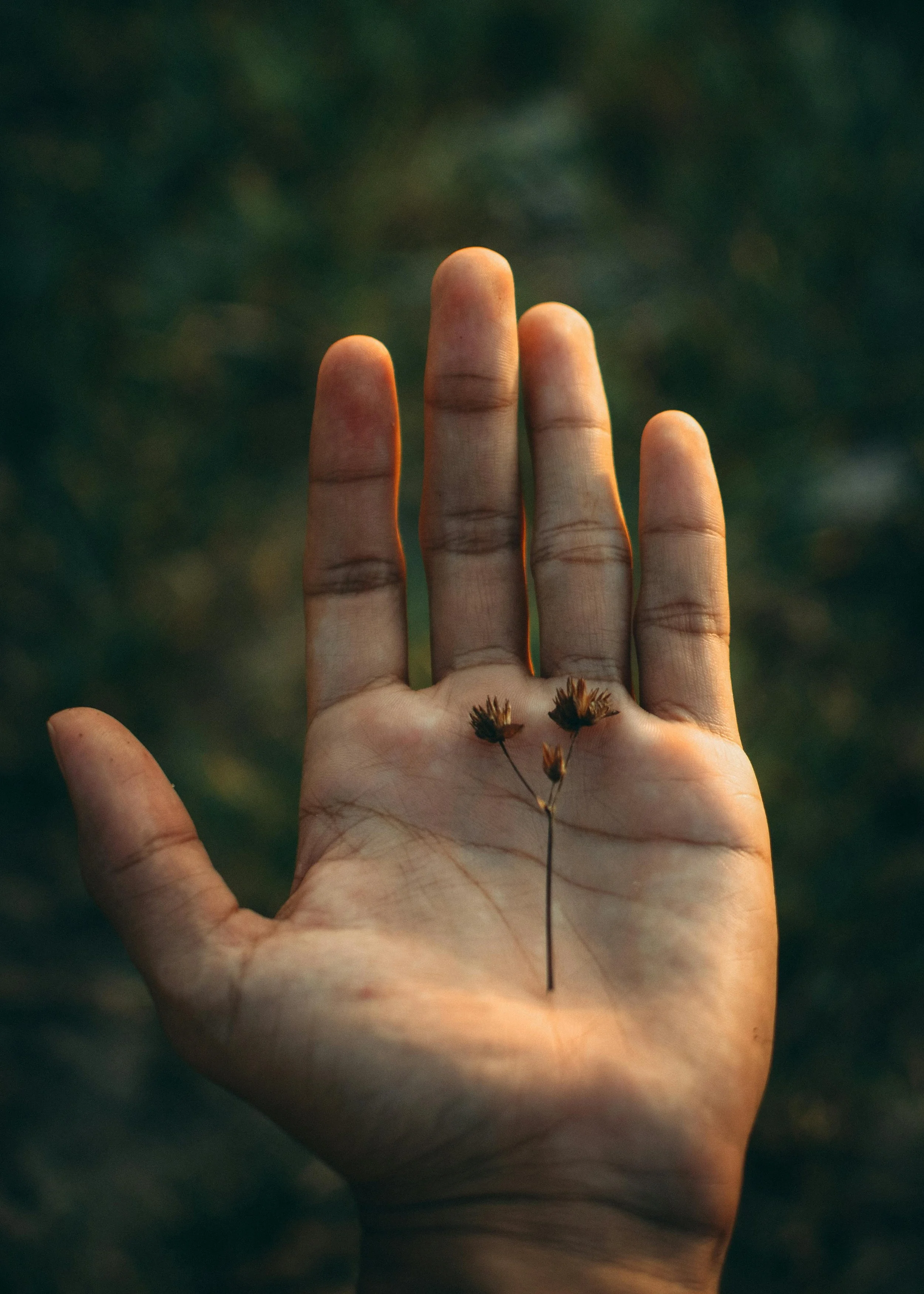
What’s in your hand is a seed—plant it.
My final example comes from John 6:5–12. A young boy offered Jesus his lunch—just five loaves and two fish to feed five thousand people. To the disciples, it was nowhere near enough. But Jesus took the little, gave thanks, and blessed it until it became more than enough. Thousands were fed that day, with twelve baskets left over. To the boy, it was a lunch; to us, it’s an example of provision.
The pattern is clear: God works with what’s already in your hand. He doesn’t need you to have what someone else has. He doesn’t bless comparison—He blesses commitment. The moment you stop despising what looks small and start using it faithfully, that’s when God multiplies it. Because by His divine power, He has given us everything necessary for life and godliness (2 Peter 1:3).
You already have the seed.
You already have the gift.
You already have what you need.
The Practice
Maybe for you it’s writing, teaching, cooking, or counseling. Maybe it’s coaching, designing, or leading. Maybe it’s your empathy, your voice, or your ability to see what others overlook. Whatever it is—that’s what God gave you to move through the lanes He’s called you to. And let me say this as someone who’s learned it firsthand: if you keep waiting for someone to hand you an opportunity, you’ll always be at the mercy of when they decide to leave the court. But when you use what’s already in your hand, the game doesn’t end when others walk away—it just changes courts.
Sometimes God removes you from an arena so you can discover that what you thought was just a staff, a lunch, or a jar of oil was actually a company, a calling, or a kingdom assignment waiting to be born. I didn’t see Turning Words Into Windows® as a miracle when I started. I saw it as obedience—using what I had: my pen, my story, my voice, my vision. But God took that “little” and began multiplying it beyond what I could have imagined. And He’s still doing it.
So, dear reader, I’ll leave you with this. Don’t despise what looks small. Don’t doubt the gift God placed in your hand. Because the truth is—you already have what you need. God’s question still stands: What’s in your hand?
Use it.
Guard it.
Grow it.
This Week’s Challenge
Take inventory this week of what’s already in your hand—your gifts, ideas, experiences, and resources. Write them down. Pray over them. Ask God to show you how to use what you have now to prepare for where He’s taking you next.
Because in the Kingdom, the game never ends when others leave — it begins when you bring what’s in your hands to God.